Corporate clients are still paying for virtual sessions, but they are not paying for what they paid for in 2020. The market for a one off remote keynote to a webinar audience has thinned considerably. What replaced it is narrower and, for the speakers who adapted, steadier: recurring cohort work, manager enablement series, and sessions built specifically for distributed teams that will never be in one room.
The shift is a budget shift. Virtual work moved out of the events line and into the learning and development line. Events budgets buy experiences and pay a fee for a date. L and D budgets buy behavior change and pay per participant, per cohort, or per license. That single reclassification explains most of what feels confusing about virtual pricing right now.
Here is where the demand actually sits, what buyers expect technically, and how to price a remote session without pretending it is either a bargain version of your keynote or secretly the same amount of work.
Where virtual sessions still win inside distributed organizations
Virtual wins whenever the alternative is that the session does not happen at all. That sounds obvious until you look at which sessions those are.
- Geographically scattered teams. A 400 person engineering org across nine time zones cannot be assembled. Two 90 minute regional deliveries can.
- Repeating onboarding content. New manager cohorts start every quarter. Flying someone in four times a year is a travel line nobody defends.
- Frontline and shift based workforces. Retail, healthcare, logistics. You deliver the same 45 minute session three times in a day to cover shifts, which is impossible to do live in person.
- Follow up after an in person event. The 60 day reinforcement session that makes the keynote stick.
- Sensitive or small group work. Executive coaching circles and peer groups that were never going to be a ballroom.
Where virtual lost is the ceremonial slot: the opening keynote whose real job is to gather people, set an emotional tone and make the offsite feel worth the flights. That job requires a room. Do not fight for it remotely.
Keep reading: How are event planners in my niche choosing speakers this season, and what changed?
How hybrid changed the technical rider and the prep load
Hybrid is the format that quietly costs the most and is priced the least accurately. You are performing to a live room and a remote audience with different needs, on a schedule set by the room.
Practical consequences for your rider:
- A confidence monitor showing the remote gallery, positioned where you can see it without turning your back to the room.
- A named person whose only job is the chat and remote Q and A queue, feeding you questions verbally or on a second screen.
- A separate audio feed for the remote audience, not a room mic. Room mics make remote attendees hear a cave.
- Agreement on what the remote audience does during in room exercises. Silence for eight minutes loses them permanently.
Prep load rises roughly 25 to 40 percent over a straight in person delivery, because you are designing two parallel experiences and a tech rehearsal for both. That is my working estimate from how the design work decomposes, not a measured figure, but it is the assumption I would price against until your own records say otherwise.
The tech rehearsal is not optional
Bill it or include it, but schedule it: 45 minutes on the actual platform, in the actual room configuration, with the actual person who will run the queue. A rehearsal on the day before catches the two failures that ruin hybrid sessions, which are audio routing and screen share resolution.
Pricing a remote session against an in person day
The instinct is to discount virtual because there is no travel. That is the wrong anchor. Travel is reimbursed or allowanced. It is not your margin. What you are actually pricing is preparation, delivery and the value of the outcome.
A defensible construction, using an in person keynote fee of $10,000 as the reference:
| Format | Typical share of in person fee | Why |
|---|---|---|
| Live remote keynote, 60 minutes, single delivery | 55 to 70 percent | Same content and prep, no travel days consumed, shorter shelf presence |
| Interactive virtual workshop, 90 to 120 minutes | 70 to 90 percent | Higher design load, breakouts, materials, facilitation |
| Same session delivered twice in one day for shift coverage | First at full remote rate, second at 50 to 60 percent | Prep amortizes, delivery energy does not |
| Hybrid delivery | 100 to 120 percent | Two audiences, two designs, extra rehearsal and staffing |
| Four part cohort series | Priced per cohort, not per session | Continuity, between session work, participant cap |
Two rules keep this honest. First, never let the discount come out of prep. If you are cutting price, cut scope: fewer discovery calls, no custom case study, standard deck. Second, price by audience size band for virtual, because 40 participants and 4,000 viewers are different products even at identical run time.
Keep reading: How do I set a keynote fee band that survives a corporate procurement review?
Licensing recordings for internal replay
Almost every corporate virtual booking now includes a recording request, usually mentioned casually. Treat it as a separate transaction, because it is one.
A workable structure:
- No license: recording for the speaker's archive and client's internal review only, deleted or unposted after 30 days. Included.
- Limited internal replay: hosted on the client's LMS or intranet, viewable by employees only, 12 months. Commonly priced at 25 to 50 percent of the session fee.
- Extended or perpetual internal use: multi year, unlimited employee viewing, sometimes with a new hire onboarding path. Priced as a multiple, often 1 to 2 times the session fee.
- External or customer facing use: negotiated separately every time, with approval over edits and how you are credited.
Whatever you agree, specify the platform, the audience definition, the term, and whether they may edit or excerpt. "Internal use" without a term is perpetual in practice.
Series and cohort work as the durable virtual format
If you want one takeaway, it is this: the durable virtual product is a series, not a session. A four part cohort with 25 participants, 90 minutes each, two weeks apart, with a short assignment between sessions, is what L and D buyers renew.
Why it survives budget review when a single remote keynote does not:
- It has an attendance roster and a completion rate, which means it can be reported on.
- It produces artifacts, the plans and commitments participants write, which managers can follow up on.
- It maps to a named capability gap in a talent plan, so it has an internal sponsor with a reason to defend it.
- It can run again next quarter without new procurement.
Practically, that means building your virtual offer as a repeatable program with a fixed cohort size, a named outcome, and a per cohort price. One number, one roster cap, one delivery window. A buyer can put that in a budget request in a single line.
See how SpeakerOneSheet handles this for professional speaking
Platform, production and captioning requirements buyers expect
Enterprise buyers have gotten specific. Expect to be asked, and to answer without hesitating:
- Platform. Zoom, Teams and Webex are the common three. Teams is now the default at many large employers, and its breakout and chat behavior differs from Zoom in ways that affect your design. Know it before you promise breakouts.
- Captioning. Live captions are a standard accessibility expectation, and for federal contractors and public sector clients they are frequently required. Confirm who enables them and whether a human captioner is needed.
- Connection. Hardwired ethernet, not Wi-Fi, plus a stated backup such as a phone hotspot. Buyers ask.
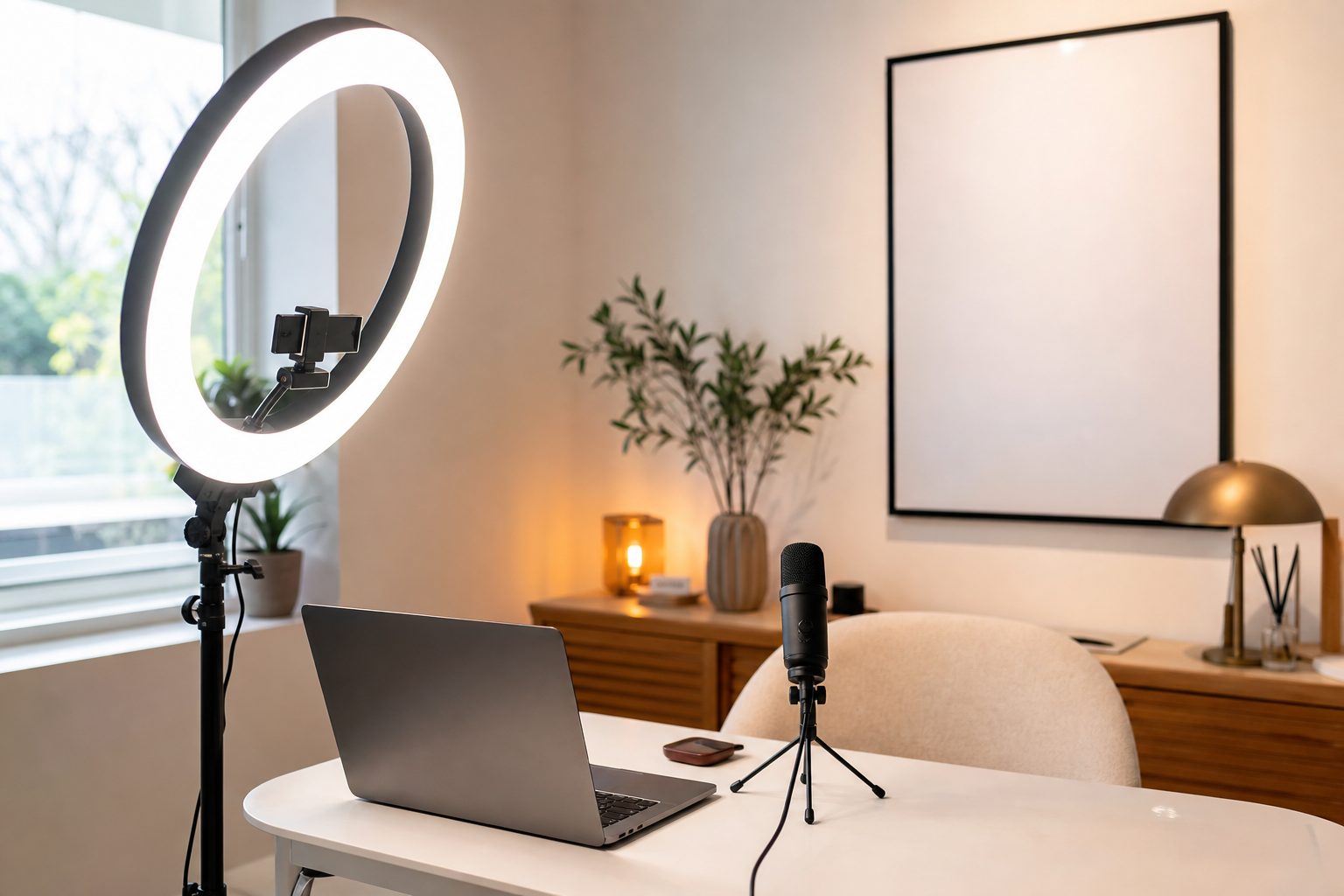
- Audio and video. A dedicated USB or XLR microphone, key light, camera at eye level, neutral background. Virtual backgrounds read as unprepared to this buyer now.
- Security review. Some organizations will not allow an outside host account. You may be a panelist on their meeting, with their controls, which changes how you run polls and breakouts.
Put these in a short technical rider you attach to every virtual proposal. It answers procurement's questions before they are asked and it signals that you have done this more than twice.
Building an offer that works in both rooms
Design once, deliver three ways. Take your core session and define an in person version, a live remote version and a cohort series version, with the same spine and different exercise structures. Then publish all three with their own fee bands, because the single most common reason a virtual inquiry stalls is that the buyer cannot tell what a remote session costs and does not want to ask.
SpeakerOneSheet is where those three versions live on one page: topic descriptions, fee bands per format, recording license terms and the dates you have open. Send the link when the inquiry arrives and let the planner price the format they actually need.